Friday, April 8, 2011

Chilean Football Dream
Contribution by Ruthie Schulder

I was psyched to go see Chile (team colo colo) vs. Brazil (team santos) in Santiago, Chile! For some reason that many of us still quite can't figure out, soccer is just not a very big sport here in the US. International friends from the UK, Australia etc who have shown me how the rest of the world views the sport: through obsessed and drunken lenses.

Jose Manuel (our tour guide, not to be confused with our other tour guide, also Jose Manuel) went up to each of us individually to emphasize his seriousness, and the message became clear: this was no joke, and soccer fans are insane. He warned us not to wear anything that would resemble the color blue, which is Brazil's color. Our tickets did not have assigned seats so we made our way to open sections that were separated by fences topped with barbed wire. There were policemen at the back of each section, just in case. We were told not to get too close to the fence because 'hooligans' were on the other side of it. The game began and there was a lot of jumping, chanting, and screaming, and singing. Chile took the lead which was apparently a huge deal since they had not beat Brazil in 13 years. The announcer came over the loudspeaker to insist that all Brazil fans stay seated until all Chile fans left the stadium, the unspoken meaning being 'don't get too close to a Chile fan right now lest you regret it.'


The game was stressful and extremely exciting, and the energy in the stadium was palpable. Jose Manuel almost shed tears of joy when Chile was up 3-1, proclaiming "I never thought I'd see this day!" Chile won 3-2 and the crowd went absolutely bonkers. Victory!!!

I only wish I had painted my face...

Thursday, March 31, 2011


Up and Down in Kigali Town
Contributed by B. Comber

Kigali is a pleasant African capital. The trip I took for work in February of 2011 was my third in under a year, and I have enjoyed each one. The streets are remarkably clean, kept that way by various cadres of diligently sweeping women. Men in bright pink outfits place brick after brick into the steep embankments that keep the hills from falling onto the carved out streets that switch back and forth across the city. And, a fun fact that should surprise anyone who has ever taken a look around a major African intersection: there is not a stray dog to be found. It is not uncommon to see people jogging, for exercise. It is not a wealthy country or an untroubled city, but it is pleasant.

The Rwando-philes will tell you to forget what you heard, that this is an optimistic society looking to a bright and promising future, rather than a dark and frightening past. Indeed, Kigali is dotted with advertisements for flights to Rome or Cairo, and billboards with bright looking people emphatically enjoying insurance coverage or ATM machines. The foreign and the fashionable cycle through an agreeable selection of bars and restaurants, and proud depictions of the country’s mountain gorillas adorn eatery entryways and the many tour and adventure companies. Of course, my personal favorite indicator of progressive thinking: a loudly advertised eco-friendly public toilet facility on the city’s main square.

The skeptics will counter that the bright and shiny veneer is the product of unrelenting cultural control by the closed circle of political decision-makers. The locus of this control sits clearly with President Paul Kagame, the country’s political focal point since the summer of 1994. Anecdotes filter through international news outlets of the illegality of even uttering ethnic designations, university students who have been expelled for asking controversial questions, and the victor-based political process that has allowed few real electoral choices in over fifteen years.

After a few days in the country and a few cautiously-phrased conversations with Rwandans, it is difficult not to come to the unsatisfying conclusion that everyone is right enough. Rwanda is like an individual who has surprised himself with the vehemence of his outburst, and is now under strict self-imposed social constraints. Those bright pink outfits, worn by men laying bricks on the embankments, indicate past participation in an extraordinary crime. There are no dogs because dogs are carnivores, and during extraordinary times will feed however they can. It is a model of forward movement that no few countries have ever attempted, and if the world has any capacity to learn from the past, no country should ever again have to try. The question of whether the model works for Rwanda will be up to the dictates of time.

Wednesday, March 9, 2011

Ruminations from Everest Base Camp

Contribution by Christina Sass

On Disappointing Guides

So I guess that brings up the first not so lucky part, our "guide". Krishna was his name and he came at the recommendation of an excellent and very professional guide in Kathmandu; it was his cousin. Well, Krishna was a super nice guy, a 22 year old student in Kathmandu, but we learned on the flight up that he hadn't been up in the hills for 5 years although he was born there. Needless to say, he really did not know much if anything about the traveling route. At our first acclimatization stop, Krishna got very ill and was somewhat dishonest about it. We decided to go on alone and carry our own bags.

On Scary Flights

The flight from Kathmandu to Lukla gave us a sneak preview of the peaks we would walk amongst for the next 2 weeks. The plane was a 16-seater, it looked about ancient. The flights in and out of Lukla are highly inconsistent due to extreme mountain weather that rolls in and out at amazing speeds. (I don't blame them, during the hike we saw no less than 3 helicopter crash sights simply left there because there is no means to clear any of it out.) We landed with a big bump onto the smallest runway I had ever seen.

On Acclimatizing

Crazy fact: if you were to be helicoptered up to Everest Base Camp and let outside with no oxygen, you'd have about 2 minutes before you would pass out or go into coma from lack of oxygen. The process of acclimatizing is serious, extremely serious. About half the people who go above 5000 meters get ill.

On Sherpas

Hiking from one tiny mountain village to another learning the interesting and welcoming culture of the Sherpa people who are so natural at living up in high elevations. Most tourists think that Sherpa is a synonym of "guide" in this region, but it is their religion. However, it is without doubt that these friendly and welcoming mountain people have unmatched abilities in mountaineering and an extreme resilience to cold and altitude. My idea of "rugged mountain man" is totally reformed now as these little but sturdy people could hike hours on end with ease in flip flops and t-shirts.

On a Local Legend

I met Pema Dorje Sherpa as he was guiding a large family from Salt Lake City to climb Island Peak. This guy summitted Everest with 3 different expeditions: Brittish, Norweigian and Korean. What a guy. He was also the coordinator of the base camp portion of the expedition that went very wrong in 1996. (He hasn't been up since ‘88). His friend was one of the people guiding the group actually up on the mountain who was blamed for the catastrophe. He spoke of Everest with such understatement. He got choked up talking about his companions who never came home from the great mountain and in the end, he gave it up after trip #3. He is a legend among local Sherpa people and should be. He knew the overwhelming danger involved and wanted his kids to have nothing to do with it.

On the Views from Everest Base Camp

Everest Base Camp and Kala Pathar (our highest point at 5550 meters or about 18,000 feet) were incredible. The mountains are of course staggeringly beautiful and honesty hard to keep track of when you are up there, there are so many high peaks and the clouds roll in with alarming speed. On the way up, the excitement builds based on what view your next day will afford you. It is a bit sad that at the top, altitude sickness and worry detract from your ability to really relax and just absorb the beauty and grandeur of what you are seeing. But it is indeed something to stand at the foot of the piece of our planet that has fought off the effects of gravity more than any other. The Nepalese consider Everest to be the goddess of the sky, named Sagamartha; being up there, you can see why.

Tuesday, March 8, 2011

International Travel for Work? YES! Er, Wait...

Contribution by Kate Hoeppel

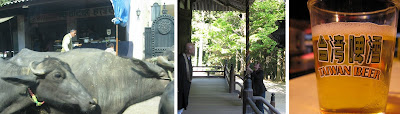
From the road: Agra, Kabusanji, Taipei

If there was a test to weed out seasoned travelers from those less savvy, I probably wouldn't make the cut. I blame laziness. It takes a lot of time and research to craft a good trip! But I realized a few months ago that I actually do a fair bit of traveling for my job to some interesting places, and while this travel is funded and scheduled by my employer, it is still travel. Below are some stories, tips and ramblings for your enjoyment.

  • If some sadistic travel agent books you a seat directly next to your boss for a 10+ hour flight, just walk right up there and explain it to the ticketing agent. They will usually give you an understanding smile and be able to move you. Polite excuses can come later. Warning: this can backfire. You may think you’re lucky being moved to an empty row until three hours into the flight two drunken newlyweds, a crying baby, or some other variety of Balrog sits down next to you spilling various substances. Sometimes I don't even move anymore… better to stick with the devil you know.
  • In general, I just say yes to any and all outings suggested by my hosts. Sometimes you score and get to see behind the scenes at an ancient Buddhist temple! Other times you score slightly less and get invited to a wedding of someone you have never met that is two hours away (without traffic).
  • If you're going somewhere off the beaten path for only a couple of days, most of which will be spent in meetings or other events, you don't really have the luxury of eating whatever you want. Think about it… the only thing worse than being sick while traveling is being sick while traveling for work. Muster up your inner resolve, repeatedly request bottled water, and feign a fear of multiple foods that frequent the “naughty list.” I should add that usually the people I am meeting with are beyond considerate of our health, and for that I am eternally grateful. However, there's always that one person who just randomly gets you something from a street vendor right outside a garbage dump and he REALLY wants you to try it, oh YOU HAVE TO TRY IT!!! You are a vision of graciousness and roll the dice. Just drink some Peptol that night.
  • Along the same vein, if you indicate an appreciation for any type of local delicacy, be fully prepared to have vats of it supplied for you throughout the trip. Sounds like heaven I know, but this too can backfire! Being “over served” fancy red wine at dinner may be delightful, but being treated to countless hookah bars at 3am under severe jet lag may not.
  • I stopped worrying about losing my luggage some time ago. The honest truth is that even if you carry a full suit with you on your flight, it probably won’t get you comfortably through a three-day conference. At least not with theater-style plenary seating, harrumph. Instead I just say a few words to the God of Forgotten Things and wear something comfy on the plane. If/when I lose my luggage I’m fully planning on just going AWOL. Especially if it’s anywhere with “European Sizes.”
  • Lastly, if you fall asleep while talking to someone at dinner, there really is nothing to say. Just apologize and check to see if you drooled. In some cultures, it may even be considered cute!

Tuesday, January 25, 2011

Organic Farming in Costa Rica

Miranda and Monica, my co-volunteers/friends from the organic farm - Finca la Flor - in Costa Rica share some of their experiences and insights about farm life there. If you are interested in learning how you too can volunteer (or how you could become an owner of your own plot of land for organic farming as part of their upcoming EcoVillage), check out:

http://www.la-flor.org/

http://ecoaldealaflor.blogspot.com/p/informacion-general.html


Miranda (fourth from right) and Monica (second from right) with other volunteers and full-time staff

Rise ‘n shine


A typical day on the farm begins with the breakfast bell at 7:00 am. It's early, but I always lug my ass out of bed to go because the food here is SO tasty.


All of the meals are vegetarian, prepared by two local women who come everyday to cook for the employees, guests, and volunteers on the farm.

So, breakfast: hot coffee, fresh fruit salad with banana and papaya, homemade tortillas or biscuits, homemade goat cheese and goat yogurt, traditional Costa Rican "gallo pinto," and more. Everyone eats a big communal breakfast together, and work begins at 7:30.

Farming

The actual farmwork itself does not require expertise on farming, but it does require physical stamina, and patience. Tasks include shoveling manure and debris for compost piles, cleaning animal waste, harvesting various herbs or vegetables from the garden beds, clearing overgrown fields, and various other odd jobs. There is always a local employee on the farm who supervises these tasks. In my personal experience, the idea of working on an organic farm was great... and the reality of being faced with a giant pile of poop at 8 in the morning in the pouring rain and wind did not match my expectations. If you are looking for an idyllic, relaxing retreat vacation, this is not the place to come. However, there is definitely a certain feeling of satisfaction in finishing such jobs.


The idea of the farm is that nothing here goes to waste. Every job has a purpose, and all of the products on the farm are part of a huge self-recycling process that keep the place moving as one self-sufficient unit. The field you clear one day becomes food for the horses, then their poop becomes the compost that fertilizes the fields where the lettuce for your salad grows. Even more interesting, to me, is that the ecological ideals of the farm are self-sustainable as well. Members of the community often visit the farm, which is also an eco-school. The tourism that the farm generates in this tiny town creates more economic opportunities for families and make eco-friendly choices more sustainable.

If interested in Finca la Flor, please note…

The weekends are no-work. For entertainment on those days, there are buses that run to Cartago or Paraiso, and from there to various other spots. Lankaster Gardens is totally worth going to, especially in good weather.

About the weather, though: be aware that this region of Costa Rica is rather cold and rainy. Do NOT leave your cold weather gear at home. Even in the "dry" season there is often rain.

We all expected to lose weight working hard on the farm. Wrong. The food is so good, and you will be so hungry, like we were, that you'll probably come out even in the end (or possibly heavier). Your biceps will look great, though, from all the heavy lifting.

There is a definite communal feel on the farm. Meal times are a big social part of the day, when everyone who has been scattered around the farm comes to the same place to talk. Volunteers come for just a few days to weeks or months at a time, and coming and going is a big part of the relationships here.

Alcohol and other substances on the farm are prohibited.

Internet and pop culture are largely frowned upon by the farms employees, although you might find kinship with the other guests.

The farm is a good place to practice or learn Spanish. During the work period, or when conversing with any of the farm's local employees, everything is in Spanish. There are also Spanish lessons offered that take up the afternoon period of the day. Classes are one on one and can be tailored to suit all levels of Spanish. The teacher is both very patient and thorough
.

Friday, January 21, 2011

Final log of scariest moments: CenAm edition

Made it back from long Central America trip. To follow up on the last post, a few more interesting things happen that qualify as the scariest experiences of my time in Costa Rica and Nicaragua. Per the format above:

Costa Rica
  • Centipede bite on toe in the middle of the night during a bathroom trip. He was about 3 inches long, it hurt like hell, and scared the bejeezus out of me.
Nicaragua
  • Hands down goes to the arrival of our small beach town hotel late one evening, only to find out that the American-born hotel owner has been held hostage in his (now closed, without electricity) hotel property for the last 3 months over some kind of business-gone-awry while a couple of thuggish, armed guards watching over. That was a scary conversation to have with the owner through the sealed front gate.

Tuesday, January 4, 2011

Running log of the scariest moments...

Now halfway through my 5-week adventure, I am reflecting on some scary moments...the superlatives which I thought I'd categorize by country (at the risk of frightening my mother in real-time):

Guatemala: two-way tie
  • unpredictable, incessant, and mere-feet-away fireworks lit by boys and men throughout the narrow streets of Antigua
  • hairpin turns in mountains where the narrow highway was washed away in many parts down endless cliffs during the last atypically wet rainy season
Belize
  • the tiny Cessna flight from Ambergris Caye to Belize City...like flying in a mini-van with wings (which may be nothing for others, but with my existing fear of flying, it was a real adrenaline-pumper)
El Salvador
  • despite only spending a short night there, this country gets a shout out for its fun earthquake, experienced in the airport 10 minutes after deplaning with the windows shaking and the ceiling wobbling
...to be continued with inclusions, inevitably, from Costa Rica and Nicaragua...